Both equipment operate with controlled airflow, but their purposes and operating principles are distinct. The Sampling Weighing Booth protects the operator and the environment during the weighing of inputs and raw materials, while the Laminar Flow Booth prevents contaminants from coming into contact with the product.
In industrial, pharmaceutical, and laboratory environments, accuracy and safety are non-negotiable. Contamination control is one of the pillars that supports product integrity, operator health, and process reliability. To achieve this level of excellence, choosing the right equipment is crucial. However, many companies face a common question: what is the difference between a weighing booth and a laminar flow booth?
Although both devices operate with controlled airflow, their purposes and operating principles are fundamentally different. My goal here is to simplify this issue so you can make the best decision for your operation.
Table of contents
Understanding Laminar Flow
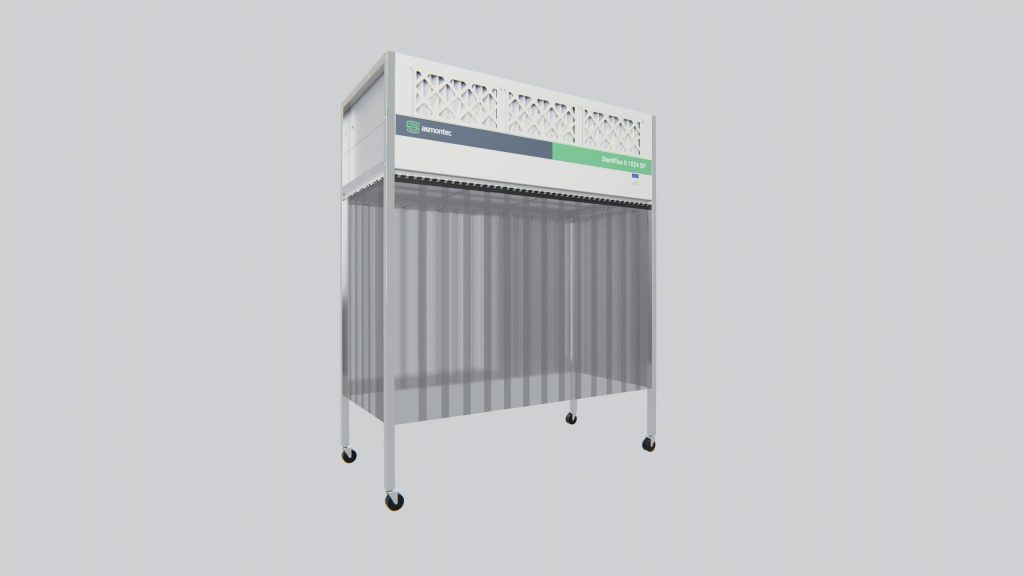
The term unidirectional laminar flow This is the key to understanding the purpose of a laminar flow cabinet. Imagine an airflow moving in parallel lines and in a single direction, without turbulence. This is exactly what happens in a laminar flow cabinet. Ambient air is drawn in, passes through a pre-filter, and then through a high-efficiency absolute HEPA or ULPA filter. These filters remove 99,99% of particles as small as 0,3 µm, ensuring that the air reaching the work area is virtually sterile.

Clean air is then blown into the work area in a continuous, unidirectional flow (vertical or horizontal), creating an "air curtain" that prevents external contaminants such as dust, bacteria, and spores from reaching the product being handled. This creates an ISO 5-rated environment, ideal for processes requiring maximum asepsis.
"Cleanroom engineering isn't just about the air you remove, but about the clean air you deliver. It's about ensuring every particle is in its rightful place, or rather, out of your process."
This equipment is essential in environments where the focus is product protection, such as handling sterile products, preparing culture media in microbiology laboratories, assembling sensitive electronic components, and aseptic packaging in pharmaceutical industries.
Another great advantage of Unidirectional Laminar Flow is its mobility to move to different environments with greater ease.
Understanding what a Sampling Weighing Booth is

On the other hand, weighing and sampling booth was designed with a different priority: the containmentIts main objective is to protect the operator and the environment from hazardous dust and vapors generated during processes such as weighing active substances, fractionating inputs, and other activities that release particles into the air.
The weighing booth's operating principle is based on downward airflow. Clean air is blown from the ceiling toward the work table, capturing the particles generated and directing them to an exhaust system, which filters them and prevents them from dispersing into the environment.
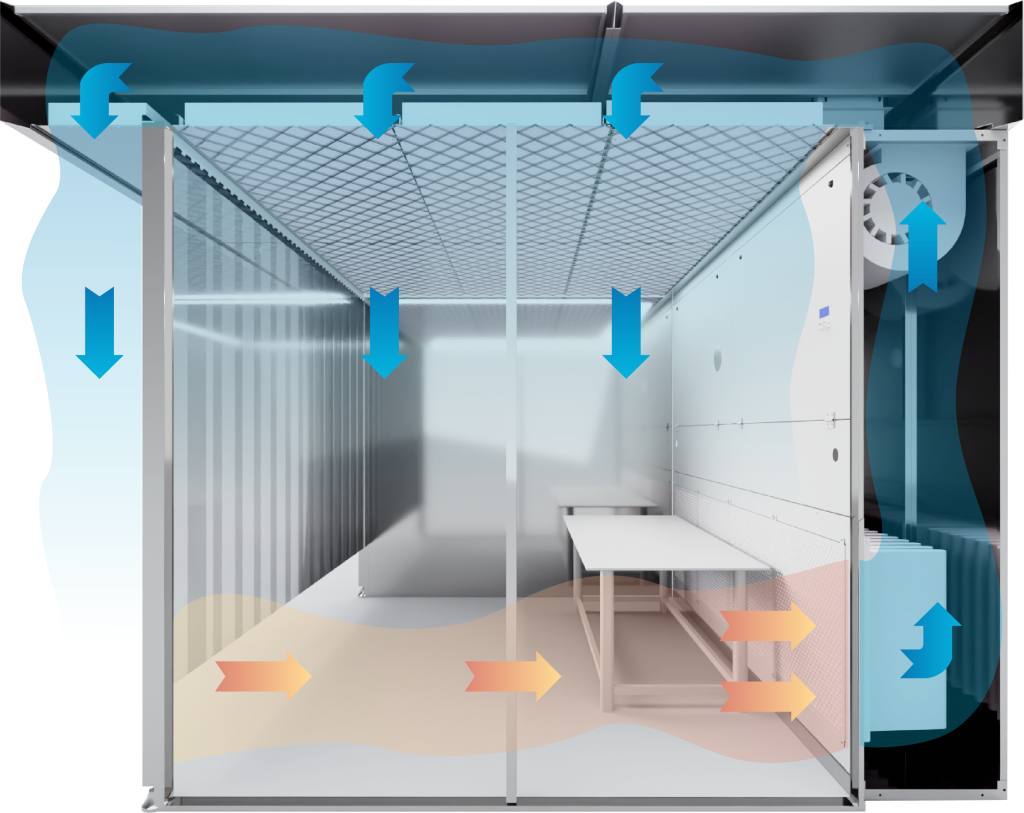
Rather than creating a barrier to protect the product from the environment, the weighing booth creates a containment zone to protect both the environment and the operator from the product. It's a shield, a protective barrier to prevent exposure to hazardous materials. These booths are widely used in the pharmaceutical, chemical, and biotechnology industries, in processes involving the handling of fine powders or toxic substances.
The main differences between a Laminar Flow Cabinet and a Sampling Weighing Cabinet
To make your decision easier, I've prepared a comparison table that summarizes the main features of each piece of equipment.
| Feature | Laminar Flow Cabinet | Weighing Cabin |
|---|---|---|
| Main purpose | Product protection | Operator and environmental protection |
| Flow Direction | Unidirectional (horizontal or vertical) | Downflow |
| Flow Type | Stable and uniform | Turbulent, for containment |
| Reference norm | ISO 14644-1 (especially ISO 5) | Occupational Restraint Standards |
| Applications | Preparation of culture media, aseptic packaging | Weighing of powders, handling of toxic substances |
Which equipment should I choose? Sampling Weighing Booth or Unidirectional Flow?
Choosing between a weighing booth and a laminar flow booth isn't a question of which is "better," but rather which is best suited for your process. If your primary objective is to protect the integrity of a sensitive product from environmental contamination, a laminar flow booth is the solution. Conversely, if operator safety and the containment of hazardous substances are your priority, a weighing booth is the right choice.
In both cases, the goal is the same: to ensure safety and efficiency in critical environments. The key is to analyze your process and identify which equipment meets your most crucial needs. To achieve this, you can count on Asmontec's experience and technical expertise.
You may also like
Questions and Answers
Not ideal. While a laminar flow cabinet purifies the air, its unidirectional flow can actually spread hazardous particles into the environment, putting the operator at risk. A weighing cabinet is the correct containment solution.
The design and validation of weighing booths generally follow occupational standards and good manufacturing practice guidelines, such as those of ANVISA or FDA, focusing on the containment of hazardous agents.
It's an airflow that moves in parallel lines and in a single direction, without turbulence. It's essential for creating a clean "air curtain" that protects the product from contamination from the external environment, ensuring process purity.
The weighing cabin uses a downward airflow to “push” the particles generated in the process into an exhaust and filtration system, preventing the operator from inhaling these substances.