Quick summary: there is no single air conditioning standard for data centers. The design relies on a set of standards: ABNT NBR 17207:2025 (environmental criteria for ICT and data center environments), ABNT NBR 16401 series (design and indoor air quality), ABNT NBR ISO/IEC 22237-4 (environmental control), and maintenance standards such as NBR 13971 and NBR 15848. Air filtration follows NBR 16101 and NBR ISO 16890.
When an industry builds or expands a data center, the first engineering question is usually: which climate control standard do I need to comply with? The short answer is that no single standard solves everything. The useful answer is that there is a set of ABNT, ISO, and ASHRAE standards that, together, define temperature, humidity, air quality, filtration, and maintenance.
I am writing this article based on my experience in the design, compatibility, and validation of air conditioning, exhaust, and pressurization systems in controlled environments. I will distinguish between legal obligations, regulatory requirements, and best practices, and provide a practical introduction to air filters, a point that is often underestimated in IT projects.
Why industrial data centers require more than just thermal comfort.
The server room of an industrial plant supports automation, ERP, process control, and traceability. A shutdown due to overheating can interrupt the production line, compromise batches, and lead to the loss of regulatory records. Therefore, climate control is critical infrastructure.
The IT environment has three risks that engineering simultaneously controls. The first is thermal: power density per rack increases with each generation of equipment, and the mixing of hot and cold air reduces efficiency. The second is hygrometric: low humidity favors electrostatic discharge, and high humidity favors condensation and corrosion. The third is contamination by particles and gases, which degrades contacts, boards, and fans. It is in this third risk that filters come into play.
Those who work with controlled environments recognize the logic: parameters defined by the purpose of the space, measured and maintained over time.
Are air conditioning standards mandatory for data centers?
Technically, ABNT standards are voluntary. In practice, they become mandatory when cited in a contract, regulation, client audit, or insurance company requirement.
There is also a specific legal obligation for maintenance. Law 13.589/2018 establishes the PMOC (Maintenance, Operation and Control Plan) for air conditioning systems in buildings for public and collective use. Confirm with the plant's technical manager if your case qualifies.
My recommendation to industrial managers is to treat three layers as mandatory for design purposes: the legal layer (PMOC and applicable regulations), the normative layer (ABNT), and the contractual layer (customer requirements, certifications, and availability classes). ASHRAE references should be included as recognized best practice, not as a legal requirement.
What are the main air conditioning standards for data centers?
The table below organizes the set of materials I use as a reference in projects.
| Norma | Scope | Where does the project have an impact? |
| ABNT NBR 17207: 2025 | Environmental criteria for ICT, communication and data center environments. | Basis of air conditioning and environmental envelope |
| ABNT NBR ISO/IEC 22237-4 | Environmental control in data center facilities | Infrastructure and requirements by availability class |
| ABNT NBR 16401 (Parts 1 and 3) | Air conditioning and indoor air quality design project | Outdoor airflow and minimum filtration levels |
| ABNT NBR 13971 | Scheduled maintenance | Systems maintenance plan |
| ABNT NBR 15848 and NBR 14679 | Indoor air quality during construction and operation, and hygiene. | Renovations, duct and equipment cleaning |
| ABNT NBR 16101, NBR ISO 16890 and NBR ISO 29463 | Testing and classification of air filters | Filter specifications |
Note: In Brazil, project equivalence is determined by NBR ISO 16890 (ePM classes).
NBR 17207: the starting point of the project
ABNT NBR 17207, published in July 2025, establishes environmental criteria for the design of indoor conditioned environments with information technology, communication, and data center equipment. Among the topics covered are air cooling configurations and temperature classes for liquid cooling, a subject increasingly relevant with high-density racks.
Regardless of the standard, good design practice is to define the environmental envelope at the equipment entrance, not the average room temperature. This detail changes the sizing: what matters is the air the server actually receives, which depends on aisle segregation, rack sealing, and airflow control. As the standard is recent, acquire the current edition and record in the descriptive report which version served as the basis.
As a complementary international reference, ASHRAE TC 9.9 recommends a temperature range of 18°C to 27°C for equipment inlets in classes A1 to A4. Treat these values as a reference and validate the most recent edition.
Air quality and the NBR 16401 series
ABNT NBR 16401 covers central and unitary air conditioning installations. Part 1 deals with the design of the installations. Part 3 deals with indoor air quality, including minimum outdoor air flow rates, minimum filtration levels, and technical requirements for components. Check the status of the current edition in ABNT before citing it in design documents.
In a data center, the flow of outside air is low because there are few people, but this air is the main entry point for dust, salt, and gases. Therefore, the selection of filters for the fresh air system deserves special attention.
Maintenance: NBR 13971, NBR 15848 and PMOC
In my experience, data center air conditioning systems fail more often due to poor maintenance than design flaws. NBR 13971 provides guidelines for scheduled maintenance. NBR 15848 addresses construction, renovation, operation, and maintenance procedures that affect indoor air quality. NBR 14679 defines the execution of cleaning procedures.
Renovations require extra care: construction generates dust, and dust gets into the air of the servers. Isolating the area, maintaining positive pressure in the IT room, and changing the filters after the work is done are steps I include in any plan.
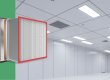
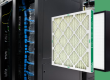
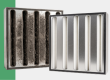
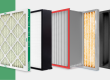
Introduction to air filters for data centers
The filter is the component that connects the standard to the reality of the room. In Brazil, three references guide the specification:
- NBR 16101: Determining the efficiency of coarse, medium, and fine filters.
- NBR ISO 16890: Classification by particulate matter efficiency (ePM1, ePM2,5 and ePM10). The status of the parts of this standard is being updated by ABNT, and Part 3 has been canceled since January 2026, so please confirm the current editions.
- NBR ISO 29463: High-efficiency filters, such as HEPA filters.
| Filter type | Function | Typical application in a data center. |
| Grosso | It retains larger particles and protects subsequent steps. | Pre-filter in the outside air and in the engine room. |
| Medium | It traps fine dust. | Second stage in air handling units |
| Fino | It retains fine particles and fibers. | Final stage of air renewal |
| High efficiency (HEPA) | Very high efficiency | Special cases and areas requiring stricter cleaning standards. |
| Chemical (activated carbon) | Remove corrosive gases | Industrial plants and coastal regions |
ASHRAE TC 9.9 uses ISO 14644-1 class 8 for particulate matter as a reference, which equates to approximately 3,52 million particles per cubic meter (0,5 µm). To achieve this, it indicates MERV 8 filters for recirculated air and MERV 11 or 13 for outside air. For gases, the reference is the G1 severity of the ANSI/ISA 71.04 standard, which limits the corrosion rate of copper to 300 angstroms per month. This logic of classes comes from the world of cleanrooms, and anyone familiar with the ISO 14644 cleanroom classification quickly understands why it applies to data centers.
Common filtering errors
- Fine filter without pre-filter: It saturates quickly and increases the cost of replacement.
- Air bypass: Poorly sealed frames allow dirty air to pass through, rendering the advertised efficiency meaningless.
- Lack of positive pressure: Without it, unfiltered air enters through cracks and doors.
- Exchange only for calendar: The correct approach is to monitor the pressure drop with a differential pressure gauge and replace it with the final value defined in the project.
Doubts that hinder the decision.
"Is a more efficient filter always better?" No. Each increase in efficiency raises the pressure drop, and the fan ends up consuming more energy. The design needs to properly size the filtration area and the fan together.
"Does renovating an existing room require halting operations?" Not always. With phased planning, isolating the work area, pressure cascading, and a well-defined schedule, it's possible to adapt the air conditioning while reducing downtime.
"Are ABNT standards sufficient, or do I need ASHRAE?" Use both. ABNT supports formal compliance in Brazil, and ASHRAE provides performance parameters widely adopted by the market and equipment manufacturers.
Next steps for your plant.
Understanding the standard is half the battle. The other half is translating it into design, execution, and validation. At Asmontec, over 30 years of cleanroom engineering have taught us that particle control, airflow, and pressurization only work when design and construction go hand in hand, which is why we work with a team specializing in turnkey projects.
If you want to delve deeper into the concepts of classification, airflow, and contamination control that underpin this type of project, download the Cleanroom Guide and share the material with your team.
Frequently asked questions about air conditioning standards for data centers.
ABNT NBR 17207, published in July 2025, establishes the environmental criteria for the design of ICT, communication, and data center environments. It should be used in conjunction with NBR 16401, NBR ISO/IEC 22237-4, and maintenance standards.
ABNT standards are voluntary in nature, but become mandatory when required by contract, regulation, or audit. The PMOC (Preventive Maintenance and Operation Control Plan), as stipulated in Law 13.589/2018, is a legal obligation for buildings intended for public and collective use.
Define the values in the project, based on NBR 17207 and the manufacturers' specifications. As a reference, ASHRAE TC 9.9 recommends 18°C to 27°C at the equipment inlet for classes A1 to A4.
Generally, a combination of coarse pre-filter, medium filter, and fine filter is used for outside air, with a chemical filter when corrosive gases are present. The exact class depends on the local outside air and must be defined in the design.
Due to pressure drop, and not just the schedule. Monitor the differential pressure, follow the PMOC plan and the manufacturer's recommendations, and replace filters after construction and renovations.