You will find
What is a Clean Room?
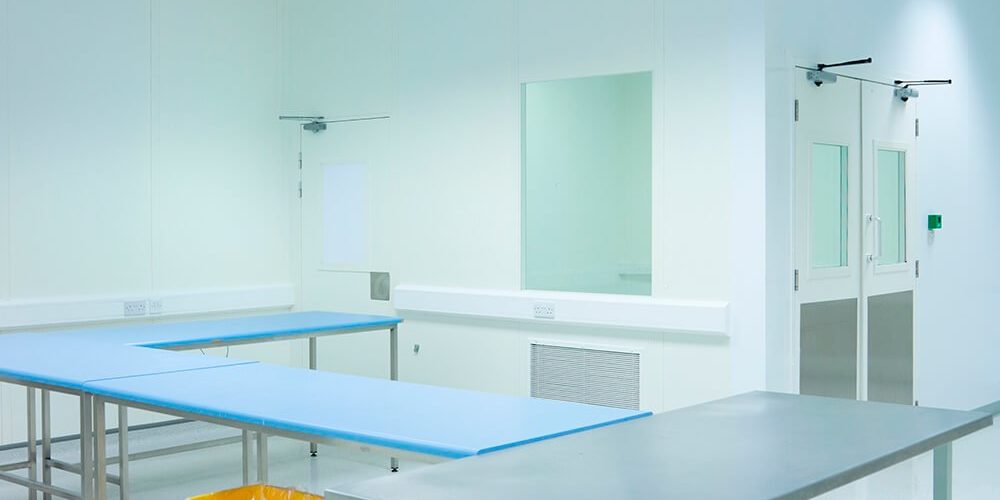
Cleanroom is technically the term used for those environments where the quantity and maximum size of particles present in the air are controlled in order to avoid contamination of the equipment present in them, which can interfere with the results of tests or the manufacture of products.
A clean room controls the number of particles existing in the environment and are isolated and controlled rooms, areas or environments that are completely isolated from other facilities, within a system that is regulated by standards of types of activities that regulate activities and interactive techniques gathered to form an organized whole, where contamination by particles present in the air interferes with the final result.
Where can we find a Clean Room?
The Clean Room is present in the chemical, veterinary, pharmaceutical, food, cosmetics and beverage industries, as well as in hospitals, laboratories, research and biotechnology centers, mining, petrochemicals, paints, electronics, science and the space sector – among others.
There are places where the environment must be rigorously clean and therefore, this term can be confusing.
This is the case in areas where meat and meat products are deboned or even in a surgical center.
These places require a special type of cleaning precisely to avoid, for example, contamination of the material to be handled.
How a Clean Room works
A Clean Room is a sterile area with environmental control defined in terms of airflow, pressure, temperature, humidity, noise, vibration, lighting, microbial and particulate contamination.
It is designed, constructed and used to reduce the introduction, generation and retention of contaminants inside.
Classification of Clean Rooms
The classification of cleanrooms is based on the purity of their indoor air, that is, the concentration of particles per unit volume of air and the application of relevant standards. Therefore, the technical standards of ABNT (Brazilian Association of Technical Standards), ISO technical standards, ANVISA (Brazilian Health Regulatory Agency) legislative standards, FDA (USA) standards, and European GMP are the main parameters to be followed to adapt cleanrooms.
For this classification, standards recommended by the International Standards Organization (ISO) and the US General Services Administration standards (known as FS209E) were adopted.
As the need for international standards grew, ISO created a technical committee and several working groups to outline its own set of standards and their applicability.
Therefore, the classification contained in part 1 of ISO 14644 is the most widely used classification worldwide today, where Cleanrooms are classified into nine classes, with the “cleanest” cleanroom referring to class 1 and the “dirtiest” belonging to class 9.
There are also grade A, B, C or D designations, based on the EU GMP, which sets limits for airborne particulate matter in “resting” and “operating” occupational states and limits for microbiological contamination. during “in operation” monitoring.
All standards aim to ensure proper protection for human beings, processes and products.
The air purity required in a Clean Room determines its classification according to the application of each room and its needs, differing levels of quality for each Clean Room, with classes established for air purity.
Class 1 to Class 5
Class 1 to Class 5 Clean Rooms operate under a laminar (unidirectional) air flow regime and are characterized by:
- Total air replenishment every six seconds;
- Air flows uniformly from the ceiling at a rate of 0,45 meters per second;
- Filters throughout the lining;
- There are no drafts within the controlled environment;
- There is a uniform flow of air through the environment with no transversal dispersion of particles;
- The air is removed from the environment only by exhaustion through the floor.
Class 6 to Class 9
Class 6 to Class 9 Clean Rooms operate under turbulent airflow and are characterized by:
- Air flowing from diffusers in the ceiling at a rate of 0,45 meters per second;
- Air currents within the controlled environment;
- Existence of transversal dispersion of particles within the controlled environment;
- Air is removed from the environment by exhaustion through the floor or ceiling.
Asmontec Clean Rooms
To learn more about Cleanroom Layout and Structure and to find out about the various types of products supplied that go through the phases of project development, manufacturing, logistics, installation and assembly, get to know Asmontec Cleanrooms.