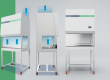
In the world of cleanroom engineering, technology is advancing rapidly to meet increasingly stringent contamination control demands. One of the essential components for ensuring air purity in these environments is the Filter Lining. This content will explore in detail what this equipment is, its advantages, applications and the significant impact it has on industries that require ultra-clean environments.
You will find
What is the Filter Lining?
Definition and Operation
The Filter Lining is a highly efficient air filtration system that uses a unique depressurized plenum technique, operating through Fan Filter Units (UFVs). This innovative system is designed to remove contaminating particles from the air, ensuring the environment remains clean and safe.
Structure and Components
Composed of a combination of filters and fans that work together to maintain negative pressure in the plenum, preventing the escape of contaminated air. This configuration allows the air to be filtered effectively and continuously, keeping the environment free of unwanted particles.
Importance of Filter Lining in Clean Rooms
Contamination Control
The presence of suspended particles in the air can compromise the quality of processes and products in various industries. Lining is essential for removing these particles, ensuring a controlled environment free from contaminants.
Compliance with Good Manufacturing Practices (GMP)
Filter Lining systems are developed to strictly comply with Good Manufacturing Practices (GMP), ensuring that environments meet the regulatory and quality standards required by various industries.
Filter Lining Applications
Pharmaceutical industry
In the production of medicines and vaccines, it is crucial to avoid cross-contamination. The Lining is able to provide a controlled environment that protects the integrity of the products, ensuring that they are safe and effective.
Biotechnology
Research and development in biotechnology requires very clean environments to guarantee the precision and safety of biological manipulations. The Filter Lining is essential to maintain these high standards.
Electronic Industry
Electronic component manufacturing requires a particle-free environment to prevent product defects. Environmental filtration technology maintains air purity, which is essential for the production of high-quality electronic devices.
Advantages of the Filter Lining
Energy Efficiency
Filter Lining systems are designed to maximize energy efficiency. Using UFVs, these systems precisely control airflow, reducing energy consumption without compromising filtration effectiveness.
Installation Flexibility
One of its greatest advantages is its flexibility. The modular design allows for easy adaptations to meet the specific needs of different environments and industries, making the installation process more agile and efficient.
Simplified Maintenance
Filter Liner maintenance is simple and can be carried out without the need to interrupt operations, a crucial factor for industries where downtime can result in significant losses.
Future of Filter Lining
Technological Innovations
The field of Filter Lining is constantly evolving, with ongoing research and development that promises to further increase the efficiency and functionality of these systems. New filter materials and advanced ventilation technologies are being developed to meet the growing demands for ultra-clean environments.
Expansion of Filter Lining Applications
Its use is expanding beyond traditional industries to include sectors such as food, beverage and automotive. Growing awareness of the importance of controlled environments is driving the adoption of this technology in new areas.
Conclusion
The Filter Lining is an essential solution for maintaining controlled environments in various industries. With its innovative depressurized plenum technique and use of Fan Filter Units, it guarantees efficient particle removal, regulatory compliance and installation flexibility. As the demand for clean and safe environments increases, Filter Lining is positioned as an indispensable technology for cleanroom engineering.