Concern about protective measures against COVID-19 has become a priority worldwide since the worsening of the pandemic in 2020. Since then, everyone has mobilized with actions aimed at preventing the spread of the virus.
Because it proved to be an extremely contagious disease, all people had to adapt routines, customs, precautions, etc. Lockdown, use of masks, social distancing, constant hand hygiene. All these measures have become part of anyone's life.
Meanwhile, studies are carried out daily to better understand the virus and find ways to protect the population. And one of those paths was the production of vaccines. Research has been intensified in laboratories to produce the immunization as soon as possible.
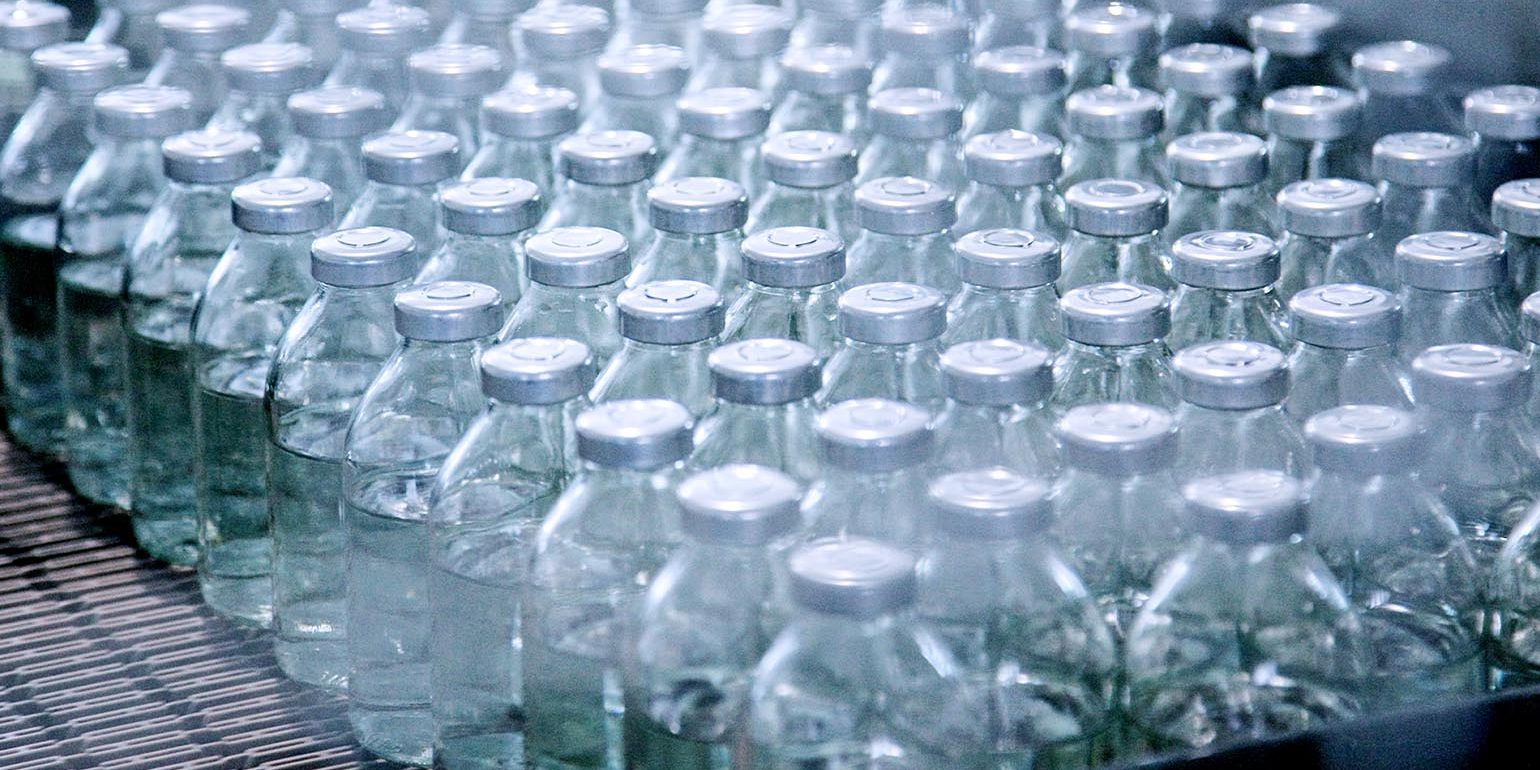
In a considerably quick period, vaccines were produced, tested and we are in the application phase, all over the world. And in addition to all the studies carried out, the production of vaccines was possible thanks to controlled environments.
Understand more below the importance of these constructions in the process of developing immunizations.
You will find
The production of vaccines in Brazil

With the constant search for immunization of the population, Brazil started a task force for the development of vaccines. Important institutions mobilized to do so. Two of the largest vaccine producers in Brazil, Bio-Manguinhos and Instituto Butantan, reinforced their factories to produce the immunizing agent.
Every month, thousands of vaccines are produced to serve the population. With each passing day, the search for alternatives to provide immunizations increases. The process is not simple. The batches must be submitted to quality control tests, with the objective of verifying stability and sterility.
These tests can last between 15 and 20 days. Thus, their efficiency is guaranteed. Data from the Ministry of Health indicate that, to date, more than 90 million doses of the COVID-19 vaccine have been distributed in Brazil.
Special care in vaccine production

The manufacture of vaccines involves not simple steps. There is a whole process of approval and study before the production itself. There are even vaccines, according to the Butantan Institute, which need a prior planning of 18 months, before the beginning of the distribution of doses. There are cases where manufacturing alone can take nine months. In other words, it is a process that takes time.
In addition to the technical specificities of each immunizer, according to the virus it intends to fight, there are several factors that directly influence it, including: temperature, materials used, handling, environment in which the operation is performed and much more.
And that's why controlled environments become so important in these cases. It is these environments that preserve the integrity of the immunizers. Handling can be done without any contaminants interfering with the product. Everything is carried out as safely as possible.
API production in Brazil
API (Active Pharmaceutical Ingredient) is of fundamental importance in the formulation of a drug. It is in it that the substance, capable of producing the expected effect, is. In the vaccine scenario, it is exactly the API that has the information necessary for the individual's body to start the work of producing defenses against a particular virus.
In the case of CoronaVac, for example, the API is the ingredient that has the “dead” microorganism. That is, it is unable to replicate and generate infections in the vaccinated person. When applied to the patient, the individual's body begins to know the structure of the Coronavirus and produce the necessary defenses.
For the production of these inputs, a strain of the Coronavirus must be selected and multiplied in the laboratory. This is done until a large quantity is reached that is enough to produce a batch. This entire process is carried out in controlled environments.
Asmontec is directly related to these achievements. Recently, it was developed for Blau Farmacêutica, a work that has an area of 3000 m², composed of modern, high-tech equipment, intended for the production of biotechnological APIs. The construction is extremely relevant for the vaccine production scenario in Brazil, due to the autonomy in the manufacture of immunizations that it provides.
The importance of ACAV

The Controlled Vaccine Storage Area (ACAV) is always designed and built to high safety standards in order to meet the main operational needs of the site. Because they are intended for the maintenance of immunizing agents, they need refrigerators, freezers, and ultra-freezers that can accommodate the materials. And, for this, the entire environment must comply with the required quality standards.
These areas have gained even more relevance during this pandemic. After all, with the accelerated production of vaccines, the construction of Clean Rooms like these has become even more necessary , so that they can be kept in perfect condition and subsequently made available to the population.
Main characteristics that a controlled area must have:
In order to improve site security and ensure that the controlled environment actually meets expectations, there are some additional points that Asmontec provides that increase the level of effectiveness of ACAV. Check them out:
- Energy stabilizer and UPS;
- power generator;
- Steel base;
- Structure totally independent of the existing construction;
- Modular supply;
- Cooling and humidity control.
All these factors contribute to the integrity of vaccines. Whether in production or storage, Controlled Environments have become a key aspect for advancing the protection of the population. After all, they are present in several fundamental stages: research, production and storage.
And Asmontec is present, once again, in works of great social responsibility, with Controlled Areas of unparalleled effectiveness. It is the efficiency of someone who has 30 years of experience, with a lot of commitment and trust.