Knowing the main procedures to avoid contamination in a clean room is essential for its maintenance. After all, the implementation project, the operation itself and cleaning of a clean area require continuous investment and effort. Therefore, the best way to prevent possible contamination is to first know the sources of transmission or spread of impurities.
Here you will find
What are the main sources of contamination in a cleanroom?
Generally, the sources of contamination in a cleanroom are classified into two groups: internal sources and external sources, which contaminate the controlled environment.
Internal sources of contamination in a cleanroom:
All particles in a cleanroom are generated by people and wear and tear. Because it is the wear and tear of surfaces that can contaminate the interior of a clean area, with the daily use of equipment and the production process itself. Staff operating inside cleanrooms can be the biggest source of particulate matter – and possible source of contamination. It is possible for operators to generate thousands to millions of particles in a single minute within a clean room.
External sources of contamination in a cleanroom:
External sources of contamination are all those particles that enter the cleanroom from the outside environment. This type of contamination in a cleanroom usually happens through seepage in doors, windows and other openings in the rooms. The biggest external source of contamination is even the air supplied by the air conditioning system.
What actions can I take to prevent contamination in a cleanroom?
Actions to prevent contamination via internal sources:
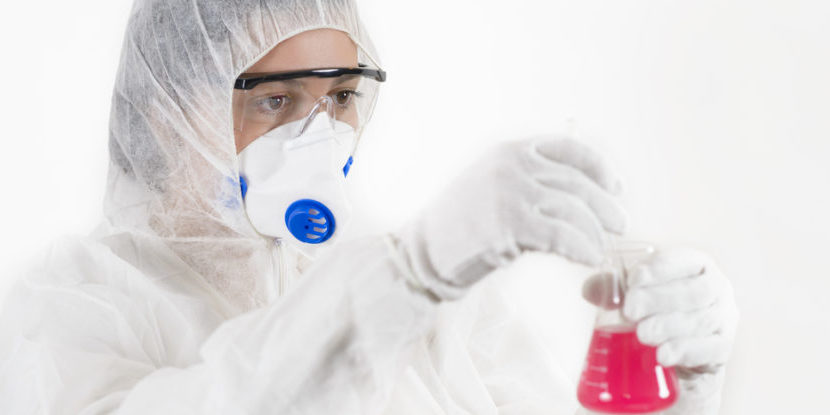
One way to control the particulates generated by the team operating the production of a cleanroom is the use of proper clothing procedures – new garments are often required – and airflow, specially designed to continuously clean operators, is essential. .
Actions to prevent contamination from external sources:

An important action to take to avoid contamination in a clean room from external operational sources is the implementation of air filtration systems. In the case of resting clean rooms, the concentration of particles will directly depend on the concentration of particles that exist in the external area.
The main sources of external contamination must be controlled initially by filtering the insufflated air (photo on the side), pressurizing the environment and, finally, by sealing gaps. This process should be part of the ongoing maintenance and cleaning of clean areas.
Main contaminants of cleanroom environments
Other contaminants occur in nature, such as pollen, bacteria, live or dead microorganisms, dust or particles of various liquids and solids. Even so, we reinforce that people in this work environment are responsible for possible contamination in a controlled environment of a clean room, as they are the main source of particles, releasing them through peeling skin, hair, clothing lint, cosmetics, breath emissions and bacteria. In many manufacturing processes these particles present in the air are considered a source of contamination.
There are many activities that can jeopardize a cleanroom operation and therefore care must be taken to avoid any contamination in these areas. Thus, it is important to be aware of each activity performed by the people operating inside the cleanrooms. An activity where cleanroom personnel write inside the room, for example, is a risk, as this activity can increase the concentration of particles in clean areas.
Other actions to control and prevent contamination in a clean room
To control and prevent contamination in a cleanroom, it is important to consider its classification. What defines the class of a cleanroom is the concentration of particles in the air of a certain size. In this regard, the deposition of particles in products and equipment must also be considered. And the actions to be taken to control contamination are the use of techniques such as aerosols, filtration and clean air flows, considered as the first steps to control possible contamination in a clean room.
However, clean area designers seek to control and even prevent the internal generation of particles altogether. For this, they need to anticipate internal sources of contamination and design adequate control mechanisms and airflows in order to limit the effect of these contaminations. In this way, air supply barriers, air flow control and the sealing of a clean room are important steps to be taken to avoid contamination of these environments and their products.
As for the personnel who operate the clean areas, we recommend that intense training be carried out in which the best practices for the operation of clean rooms must be informed, considering procedures, processes and behaviors of all the team.
The furniture, machinery and equipment that make up a clean room are fundamental parts that we must consider as a source of contamination, due to wear, cleaning and maintenance. Thus, when designing the cleanroom, consider that the area is well sealed, with as few sharp corners as possible. This will avoid bumps, crevices and possible openings. Therefore, we recommend that when designing the clean area, one of the actions to control contamination is that all finishes in the room must be rigid, non-skinning and very resistant to wear or abrasion, thus increasing the life of the cleanroom and preventing the spread of contamination. impurities and possible contagions.
Any questions? Contact us and we'll help you.